If you follow real estate in Abuja, you have probably heard the name Karsana mentioned more often in the last two years than in the previous ten. Some people say it is the next Gwarinpa. Others say it is hype. As I always say, the way to settle that kind of argument is with facts: what was built, what it cost, who it serves, what research says about roads and property values, and what risks a buyer should watch.
That is what this article does. It is long on purpose. By the end you should be able to explain to anyone why roads matter so much in real estate, what has actually happened in Karsana, what the Renewed Hope Housing Scheme really is, and how to approach the area like an informed buyer instead of an excited one.
Let’s start with the foundation.
Road Infrastructure: The Foundation of Real Estate Growth
Every property has three things going for it: what it is (the building or land), where it is (location), and how easily people can get to it (access). The first is in the developer’s hands. The second cannot be changed. The third is largely controlled by government, because governments build the roads.
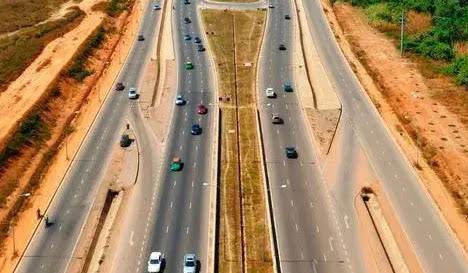
That is why road infrastructure sits at the center of real estate investment in almost every country. A plot of land with no road is difficult to build on, difficult to sell, and difficult to live on. Materials struggle to reach the site, workers spend more on transport, financiers hesitate to lend against it, and future residents wonder how they will get to work, school or hospital. The moment a good road arrives, every one of those problems shrinks at once.
Property economists describe this through the idea of accessibility. Land is valued for what you can reach from it. A plot that is 20 minutes from jobs, markets and schools is worth more than an identical plot that is 90 minutes away, because the buyer saves time and transport cost every single day for as long as they own it. Over years, that saving is capitalized into the price.
Research from Nigeria supports this. A review of studies covering Ghana and Nigeria found that well-planned road improvements generally enhance property values by improving accessibility and connectivity. That same review is honest about the downsides, though: noise and traffic congestion can reduce how desirable a residential area feels. Roads are not magic. They are a tool, and the results depend on planning, quality and maintenance. We will return to this later.
Abuja is a particularly good place to see the road effect, because the city is planned. Unlike cities that grew organically, Abuja was designed in phases, with districts opened up as the Federal Capital Territory Administration (FCTA) extended engineering infrastructure: roads, drainage, water, power. When you look at how Maitama, Asokoro, Wuse and Gwarinpa became what they are, you see the same pattern: infrastructure first, then demand, then value.
Karsana is now in that early stage.
Where Karsana Fits Into Abuja's Growth Story
Before the money and the roads, it helps to understand the geography.
Karsana is a district in Abuja. Area guides place it in Phase 4 of the city’s master plan, positioned west of Gwarinpa and Life Camp, with Katampe Extension to the northeast and Dawaki and Kubwa to the north. Its northern boundary is the Murtala Mohammed Expressway, also called the Outer Northern Expressway, which links the city center to the east with the highway leading west. The same guide estimates a typical drive to the city center at about 30 minutes, and notes that the Abuja light rail’s Idu Station lies to the south.
Those are the raw ingredients: a location next to established, high-demand districts (Gwarinpa is one of Abuja’s largest and most sought-after residential areas), a major expressway on its boundary, and rail access nearby. What Karsana lacked, until recently, was the internal road network to tie it all together.
That gap is exactly what the FCT Minister said he saw at the housing project’s groundbreaking. Wike recalled that there was no access road to the area when the 3,112-unit Renewed Hope City project was inaugurated, and that he wondered how people living there could even reach their homes. Developers, he said, worried that their investments would be wasted without roads.
This is the crucial point. Karsana was not a “hotspot” because someone declared it one. It became a serious candidate because the missing piece was identified and then funded and built.
₦31.66 Billion: A Massive Commitment to Karsana
Let me be precise about the number, because precision is what separates a credible article from a sales pitch.
The approval. In February 2025, the Federal Executive Council (FEC) approved ₦31.66 billion for the construction of an access road to the 3,112-unit Karsana housing project in Abuja. The Federal Ministry of Housing and Urban Development said the approval followed a memo presented by the FCT Minister, Nyesom Wike, in line with a presidential directive issued during the project’s launch the year before. So the ₦31 billion figure people quote is the approved contract sum for the Karsana access road network, and Wike’s role was driving it through the approval process and then delivering it.
The contractor and the timeline. The project was awarded to Lubrik Construction Company Nigeria Limited, and the award was made in February 2025. But a mid-2025 report noted that the estate itself could not yet be commissioned because the access road works awarded by the FCT Minister remained unfinished, according to the Housing Minister’s remarks to a House of Representatives committee in July 2025. In other words, the houses were rising while the roads lagged, a very common problem in Nigerian development.
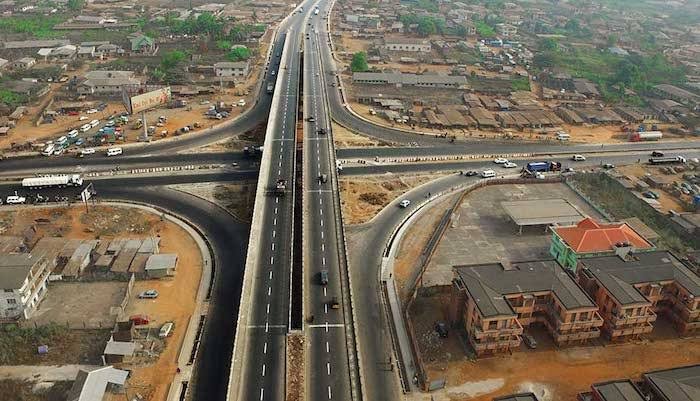
The flag-off. The FCT Minister formally flagged off the construction on Friday, September 26, 2025. The project covered 10.5 kilometers of access roads (N11, N16, N40 and SILS 03) serving the Renewed Hope Housing Estate in Karsana District, with an expected completion period of 18 months. At the flag-off, Wike promised that funds would be made available so the work could be finished in time for commissioning during the President’s third anniversary in office.
The commissioning. That target was met. On Friday, July 3, 2026, the roads were commissioned. President Bola Tinubu, represented by Senate President Godswill Akpabio, inaugurated the 10.5-kilometer network. That is roughly nine months after the flag-off, well inside the 18 months originally projected. The President praised the delivery as a break from what he called an era of “awarded and abandoned contracts”, and Wike credited the federal government’s prompt payment to contractors and the contractor’s performance for the timely delivery.
Why does this matter to a property buyer? Because in Nigeria, the difference between a road that is announced and a road that is finished is enormous. Many infrastructure projects stall for years. Here, there is a documented approval, a named contractor, a flag-off date, and a commissioning date. Those are verifiable milestones, not rumors.
What the Roads Actually Connect
The 10.5 kilometers are not one road. They are four components:
- N11, N16 and N40, which are arterial roads (the main roads that carry traffic between districts)
- SILS 03, a Special Important Local Street
According to the FCT Minister, the network is meant to decongest traffic, enhance connectivity between Karsana and other parts of the city, and spur commercial and residential development. At the commissioning, the President described the key link: by connecting Karsana West to the Outer Northern Expressway, thousands of affordable housing units become accessible, livable and safe.
Think of it like plumbing. The Outer Northern Expressway is the main pipe; the new arterials are the branches that finally connect the district to it. Before, a large area of land sat next to a major expressway but with no proper way to reach it. After, that land has a working connection to the whole city.
The Minister also signaled that this is not the end of the story. On the same day, he announced that he would flag off the Kaba–Kagini–Zaudna road on July 8 following residents’ appeals about its poor condition. And a broader review of the Minister’s works noted that he is also completing the Karsana Ring Road, rehabilitating old Keffi Road from Dei Dei to Life Camp Junction, and building the Trans-N2 Highway linking the Central Business District to Wuse. Whether every one of these will be delivered as promised is something to monitor, but the direction of investment around Karsana is clear.
How Road Infrastructure Drives Property Value: The Cascade Effect
Let me walk through the chain reaction, step by step, because it is the heart of this whole topic. I call it the cascade effect.
Step 1: Access opens. A new road reduces travel time and vehicle running costs. The President put it plainly at the commissioning: less time in traffic, lower vehicle costs, safer movement at night.
Step 2: Developers gain confidence. Developers finance projects with borrowed money, and lenders want to know that buyers can actually reach the finished product. Once access exists, more developers are willing to start building. This is precisely what Wike described: developers were nervous about wasted investments until the roads were promised.
Step 3: Construction activity increases. New estates, shops, schools and clinics follow. Every project creates jobs and brings in service providers, from artisans to suppliers.
Step 4: Amenities arrive. Once enough people live in an area, businesses follow them: supermarkets, pharmacies, restaurants, banks, private schools. This is the stage where an area starts to feel like a real neighborhood rather than a construction site.
Step 5: Demand rises. More people want to live there because it now offers a workable commute and everyday conveniences. Renters and buyers who could not afford established districts like Maitama or even Gwarinpa look for the next affordable alternative.
Step 6: Prices respond. When demand grows faster than supply, prices rise. This is the step most people focus on, but it is the last link in the chain, not the first.
Two important honesty points about the cascade. First, it does not happen instantly. The steps unfold over years, not weeks. Second, it does not happen automatically. Prices “usually” go up after infrastructure, but usually is not always. Oversupply, poor maintenance, weak title security or an economic downturn can interrupt the chain at any step.
What the Research Says: Evidence From Nigeria
An educational article should not rest on logic alone. Do the numbers back the story? Here is what Nigerian studies have found.
Lagos (Ojo LGA). A study of road networks and residential property values, using a survey of 473 respondents across nine major roads, found that properties within 100 meters of arterial roads had about 20% higher rental values than those farther away, and properties along well-connected roads showed a 15–25% increase in sales value. A related study on commercial property in the same area reported that proximity to bus rapid transit corridors was linked to price increases of 30–68%.
Ibadan (peri-urban areas). A study of road construction along two roads in Ibadan surveyed 250 respondents and found that construction enhanced accessibility, reduced traffic diversions and increased vehicle speeds. But it also recorded concerns about property loss, crime and environmental degradation. The lesson is that peri-urban road projects produce winners and losers.
West Africa overall. The broader literature review I mentioned earlier concluded that roads generally lift values but that inadequate maintenance can negate the benefits, and that noise and congestion can lower the desirability of properties right next to busy roads.
What should you take from this? Three things.
- The direction is consistent. Across studies, better road access is associated with higher property values.
- The size of the effect varies a lot. The Lagos figures are not a promise for Karsana. Every district has its own supply, demand and economic conditions. Treat those percentages as an illustration of the mechanism, not a forecast.
- Details matter. Being close to an arterial road can help, being right on a noisy one can hurt, and a road that falls into disrepair stops delivering benefits. Location within the district is important.
The Renewed Hope Housing Scheme: What It Really Is
The second pillar of Karsana’s story is the housing scheme, and this is where I want to be especially careful, because it is often described loosely.
The basics. The Renewed Hope Cities and Estates Programme is a nationwide initiative of the Federal Ministry of Housing and Urban Development. It was launched in February 2024 when President Tinubu flagged off the 3,112-unit Renewed Hope City in Karsana, Abuja. Karsana is the pilot and the flagship.
The structure. The city is delivered through a Public-Private Partnership (PPP). The Ministry signed an arrangement in December 2023 with a consortium of Continental Civil and General Construction and Ceezali Limited to deliver a total of 100,000 houses nationwide, of which 20,000 are planned for the FCT. Under the arrangement, the Ministry creates an enabling environment and helps secure buyers through the Federal Mortgage Bank of Nigeria (FMBN), while the developers source land and finance construction.
The financing support. To help the developers, FMBN secured a ₦100 billion offtaker guarantee for the Karsana project. The Housing Minister explained that this matters because it helps developers manage high land costs and double-digit interest on construction loans.
Cities versus Estates. The programme has two models, and mixing them up is a common mistake. Renewed Hope Cities use the PPP model, where private developers carry the financing cost, which pushes prices up. Renewed Hope Estates are funded from budgetary provisions with free land and infrastructure subsidies, which makes them cheaper. According to the Housing Minister’s November 2024 presentation, a one-bedroom apartment at Karsana under the PPP model costs about ₦22 million, compared with roughly ₦8–9 million for a similar unit in a budget-funded Estate. He said plainly that the PPP cities are aimed at middle- and high-income earners who can afford market-rate housing, while the Estates target lower-income groups.
That correction matters for how we describe the scheme. Karsana’s Renewed Hope City is “affordable” relative to the general Abuja market, but it is not a low-income scheme. Please do not tell a prospective buyer it costs ₦9 million. Prices may also have changed since those 2024 figures, so always confirm current pricing on the official portal.
The scale. The Housing Ministry described the nationwide programme as having 14 active construction sites and 10,112 housing units under construction as of late 2024. The problem it is trying to solve is huge: the Housing Minister has said Nigeria needs about 550,000 housing units annually over the next decade, at an estimated cost of ₦5.5 trillion per year.
How people apply. The ministry built an online portal for buyers. By late 2024 it reported that over 47,605 Nigerians had created accounts and more than 1,000 paid applications had been recorded. You choose a home, apply, pay and print a provisional letter of offer, all online. The same ministry material also mentions mortgage routes such as the National Housing Fund (NHF) and rent-to-own options, though you should verify current eligibility and rates directly with FMBN.
What this means for the neighborhood. Whatever you think of any government programme, a project of 3,112 homes creates a built-in population. Thousands of households moving into one district need shops, schools, transport, security and services. That is a demand base, and it is why developers of private estates have been positioning themselves right next to it. In fact, several listings for private estates in Karsana openly advertise their location by pointing out that they are opposite or beside the Renewed Hope City.
The Combined Effect: Infrastructure Plus Housing Policy
Put the two pillars together and you get something more powerful than either alone.
The road without the housing scheme would open land, but there would be no anchor population and no guarantee of demand. The housing scheme without the road would produce homes that are difficult to reach and difficult to commission, which is exactly what happened in 2025, when the estate could not be commissioned until the access road was completed.
Together they form a classic development pattern: infrastructure investment plus housing policy plus a guaranteed anchor population equals favorable conditions for appreciation and community growth. I say “favorable conditions” deliberately. Conditions are not guarantees. But favorable conditions are what serious investors look for.
What the Karsana Property Market Looks Like Right Now
I checked current listings so you can see the market as it stands. One important caveat first: these are asking prices from advertisements, not completed transaction prices. Sellers ask for more than they eventually receive, and different estates have very different levels of development and title security. Treat this as a rough map, not a valuation.
According to Nigeria Property Centre, there were 306 flats, houses, land and commercial properties for sale in Karsana as of August 2026, with an average price of about ₦180 million. That average is pulled up by a few very large listings, so it says little about a typical plot.
For residential plots inside estates, recent listings show asking prices in these ranges:
Plot size | price range |
180 sqm | about ₦19 million |
250 sqm | about ₦26–30 million |
350 sqm | about ₦37–42 million |
500 sqm | about ₦52.8–60 million |
Those figures come from several estate listings, including 180 sqm at ₦19m, 250 sqm at ₦26m, 350 sqm at ₦37m and 500 sqm at ₦52.8m with a payment plan, and another estate at 250 sqm for ₦30m, 350 sqm for ₦42m and 500 sqm for ₦60m. Several listings also advertise deposit-and-installment plans, such as 40% initial deposit and a six-month payment plan.
For larger parcels aimed at developers, asking prices run into the billions. Examples include a 13.3-hectare parcel behind the Renewed Hope Estate at ₦7 billion and land at ₦500 million net per hectare in another listing.
A separate area guide from March 2026 gave a general range of house prices from ₦28 million to ₦55 million and rent from ₦1 million to ₦3 million per year, but note that this sits alongside luxury listings in the hundreds of millions, so the market is clearly wide and uneven.
What can we conclude from this? The market is active, plentiful (hundreds of listings), and spans everything from entry-level plots to large development parcels. That supports the “hotspot” description in terms of activity, though listings alone cannot tell us how fast prices have risen or will rise. If someone tells you a specific percentage gain, ask for the evidence: comparable sales, dates and documents.
The Risks Every Buyer Should Understand
An educational blog that only talks about upside is not educational. Here are the real risks and how to manage them.
- Title and documentation risk. This is the number one risk in Abuja real estate. Land in the FCT is administered through the FCT Administration, and the strongest title documents are those issued by the authorities, typically a Certificate of Occupancy (C of O) or Right of Occupancy (R of O) with a proper allocation trail. Listings in Karsana openly advertise their title type, and they vary. Some say FCDA C of O; others carry different documents. Never accept “documents are ready” as an answer. Ask to see them, and have an independent lawyer verify them through the relevant land registry.
- Seller authority. Confirm that the person selling actually owns or is authorized to sell the land. Check who the original allottee is, whether the estate developer holds a valid master title, and whether your plot is properly carved out and documented for you.
- Overlapping claims and land use. Some parcels in the district have been subject to disputes over the years. Ask whether the land falls within the approved layout, whether there are any encumbrances, and whether the land use (residential, commercial, mixed-use) matches your plan.
- Infrastructure inside the estate. A commissioned public road does not automatically mean the estate’s internal roads, drainage, water and power are in place. Many listings advertise these features (drainage, gatehouse, security), but advertised is not delivered. Visit the site physically. The best time to visit is after heavy rain, so you can see how drainage and roads actually hold up.
- Timing and liquidity. Land can be hard to sell quickly. If you might need your money back within a year or two, land in a developing district may not suit you. Real estate rewards patience.
- Payment-plan traps. Installment plans are convenient, but read the contract carefully: what happens if you miss a payment, when do you receive your documents, and can you get a refund? Only pay into properly named company or escrow accounts, and keep every receipt.
- Over-reliance on promises. Government projects announced in speeches are not the same as projects delivered. The Karsana roads are commissioned, which is a strong point, but follow-on projects like the Ring Road or Kaba–Kagini–Zaudna road are still in progress or just starting, so treat them as prospects until completed.
- Maintenance. As the research reminds us, roads that are not maintained stop delivering value. Watch whether the FCT Minister maintains the network over the coming years.
None of this is a reason to avoid Karsana. It is a reason to buy carefully. The buyers who lose money in Abuja are rarely the ones who chose a good location; they are the ones who skipped verification.
Who Should Consider Karsana, and On What Timeline?
Different buyers have different goals, and Karsana suits some better than others.
End-users (people who want to live there). If you want a home in a developing district with a strong likelihood of improving amenities, Karsana is worth serious consideration, particularly for those who work in the northern parts of the city or near the expressway corridor. Rent guide figures suggest a fairly wide price range, so you can find options at different budgets. Do a real commute test at your own working hours before deciding.
Investors seeking appreciation. Land in a district that has just received its main access roads sits at an interesting stage of the growth curve. But appreciation takes time, so think in years, not months, and choose parcels with clean documents.
Rental investors. A population of thousands moving into the Renewed Hope City could create rental demand nearby. Consider the tenant profile, expected rents and vacancy risk before assuming income.
Developers. Large parcels are being offered, and access has improved. But land costs are already substantial, so run your numbers carefully.
Those who need money soon. If you cannot afford to lock capital away, be cautious with any land investment.
Is It Too Late to Buy in Karsana?
This is the question I get most often, and it deserves an honest answer.
The road has been commissioned. Some of the price movement that comes with new infrastructure may already have happened, and sellers know it, which is why you see asking prices climbing across many listings. Anyone who tells you prices have “not moved yet” is probably selling something.
But “the road is commissioned” is not the same as “the growth is finished.” Consider what has and has not happened. The arterial access network is complete. The 3,112-unit Renewed Hope City is still working its way toward full occupancy. Amenities such as shops, schools and clinics are still arriving. Additional roads are planned or underway. In the cascade I described earlier, the district has probably passed Steps 1 and 2 and is moving through Steps 3 and 4. Steps 5 and 6, the stages where sustained demand shows up in prices, take longer.
So my honest position is this: it is not too late to look, but it is too late to be careless. The easy early-mover advantage, buying a plot with no road at all, has passed. What remains is the opportunity of a district transitioning from “promising” to “functioning,” and the winners will be the buyers who verify documents, negotiate sensibly and hold with patience.
Frequently Asked Questions
Did Wike personally spend ₦31 billion on Karsana roads?
Not exactly. The FEC approved ₦31.66 billion for the access road in February 2025, on the Minister’s memo. The FCT Administration awarded and supervised the works. When you write or speak about it, “the FEC-approved ₦31.66 billion Karsana access road” is the most accurate phrasing.
When were the roads commissioned?
On Friday, July 3, 2026, after a September 2025 flag-off.
How long is the road network?
Ten and a half kilometers, made up of N11, N16, N40 and SILS 03.
Is the Renewed Hope City a low-income scheme?
No. The Housing Minister described the PPP “Cities” as aimed at middle- and high-income earners, with Estates aimed at lower-income groups. Confirm current pricing on the official portal.
How many housing units are in Karsana’s Renewed Hope City?
3,112 units.
Will property prices definitely rise?
Nobody can promise that. Research suggests better roads tend to raise values, but the size and timing vary, and local factors like supply, title security and the economy matter.
What documents should I demand?
Ask for the title document (C of O or R of O), survey plan, allocation letter, receipts and the developer’s authority to sell, and have an independent lawyer verify them before you pay.
What is the best first step?
Visit the site, talk to residents, and verify documents before discussing price.
Conclusion: Follow the Infrastructure, But Verify Everything
Let me pull the story together.
Roads are the foundation of real estate value because they determine access, and access determines what people will pay. Karsana had land, location and a major expressway on its boundary, but it lacked the internal road network to connect them. That gap is now closed: ₦31.66 billion was approved, a contractor was engaged, construction began in September 2025, and a 10.5-kilometer network was commissioned in July 2026, within its planned timeline.
At the same time, Karsana hosts the flagship of the Renewed Hope Housing Scheme, a 3,112-unit city that creates a built-in population and has attracted private developers to the surrounding land. Infrastructure plus housing policy plus a growing population is the recipe that has shaped Abuja’s best-known districts before.
But a good story is not a substitute for due diligence. Prices are already moving, the market is crowded with listings of very different quality, and the biggest risks, above all title and documentation, are entirely avoidable if you take them seriously.
So follow the infrastructure, but verify everything. If you are considering Karsana as a place to live or invest and want to work out how to position yourself, reach out to me and let’s have that conversation. And if you want the full walkthrough in video form, I explained it all in the YouTube video linked below, so be sure to check it out.
Disclaimer: This article is for educational purposes only and is not financial or legal advice. Prices cited are advertised asking prices and may have changed. Always verify documents independently and consult a qualified lawyer and estate surveyor before buying.